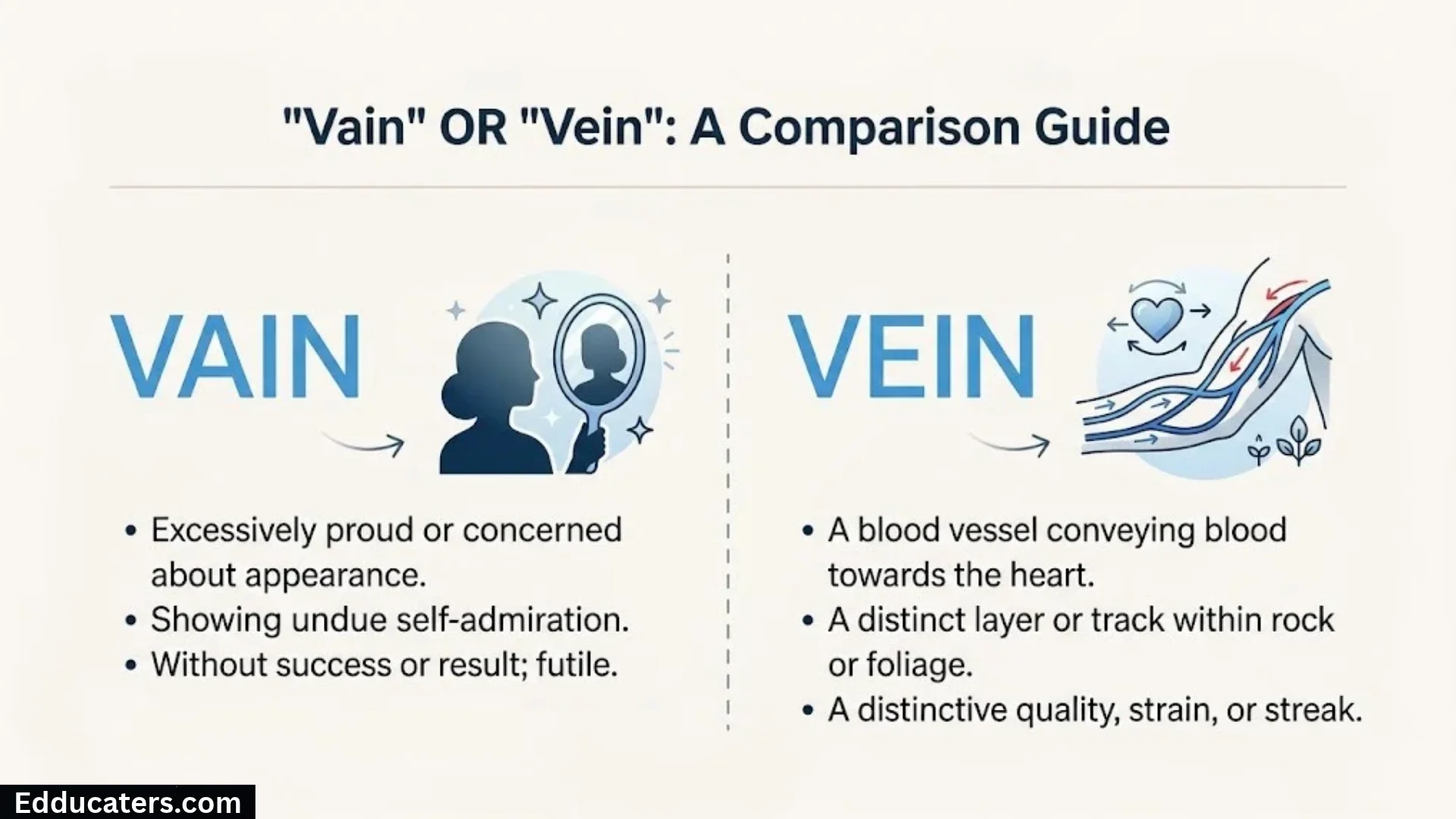
Have you ever wondered whether to write vain or vein? These two words sound exactly alike in standard American English, but their meanings are quite different. Choosing the wrong spelling can change the meaning of your sentence completely.
The good news is that the difference between vain or vein is easy to understand once you know what each word means. Vain usually describes someone who takes too much pride in their appearance or abilities. It can also describe an effort that fails to produce the desired result. Vein, on the other hand, usually refers to a blood vessel, a mineral deposit in rock, or a particular style or manner of expression.
For example, you might describe someone as vain because they constantly admire their reflection. However, if a nurse looks for a blood vessel before drawing blood, the correct word is vein.
Remember this simple rule: vain relates to vanity or futility, while vein relates to blood vessels, minerals, or a particular style.
Let’s explore their meanings, spelling differences, pronunciation, examples, and common mistakes so you can choose the correct word with confidence.
What Is the Difference Between Vain or Vein?
The main difference between vain or vein lies in their meanings and grammatical roles. Although they share the same pronunciation, they serve different purposes in English.
Vain is an adjective that describes excessive pride or something done without success. Vein is a noun that commonly refers to a blood vessel, a mineral deposit, or a particular manner of speaking or writing.
Here’s a quick comparison to help you remember the distinction.
| Feature | Vain | Vein |
| Part of speech | Adjective | Noun |
| Main meaning | Excessively proud | A blood vessel |
| Secondary meaning | Unsuccessful or futile | A mineral deposit or a particular style |
| Common expression | In vain | In a similar vein |
| Example | She is vain about her appearance. | The nurse found a vein in his arm. |
| Memory clue | Vanity and pride | Blood and blood vessels |
Both words belong to the category of homophones, which means they sound alike but have different spellings and meanings.
Consider these examples:
- Vain: He was too vain to admit that he had made a mistake.
- Vein: A blue vein was visible beneath the skin of his hand.
- Vain: We searched in vain for the missing keys.
- Vein: The author continued the story in a similar vein.
Notice how the surrounding words reveal the intended meaning. Pride, appearance, and unsuccessful efforts point toward vain. Blood vessels, minerals, and styles of expression point toward vein.
One important detail is that neither spelling is inherently incorrect. The mistake occurs when you use the right spelling for the wrong meaning.
What Does Vain Mean?
The word vain has two main meanings in everyday English. It can describe a person who has excessive pride or an action that fails to achieve its purpose. Understanding both meanings is essential because they appear in different sentence structures.
According to the Cambridge Dictionary’s definition of vain, the word can describe someone who is too concerned about their appearance or achievements. It can also describe something unsuccessful or useless.
Vain Meaning Excessively Proud
When you describe someone as vain, you’re saying that the person cares too much about their appearance, abilities, achievements, or social status. The word often carries a negative tone because it suggests that the person places too much importance on themselves.
For example, someone who checks their reflection every few minutes and expects constant compliments might seem vain. Likewise, a person who constantly brags about their intelligence may display vanity.
Here are some examples of vain used to describe a personality:
- She is vain about her appearance and spends hours choosing an outfit.
- He was too vain to admit that his colleague had a better idea.
- The actor seemed vain because he talked about his looks throughout dinner.
- His vanity prevented him from accepting helpful criticism.
The related noun vanity describes excessive pride in yourself or your appearance. Arrogance is closely related, although it more directly suggests an exaggerated sense of superiority over others.
However, being concerned about your appearance doesn’t automatically make you vain. Taking care of your skin, wearing clothes you like, or feeling proud of an achievement can be perfectly normal. The word vain suggests excessive self-interest rather than ordinary confidence.
Remember: If you’re describing a person’s excessive pride, use vain, not vein.
Vain Meaning Without Success
The second meaning of vain describes something that fails to produce the intended result. It often appears in the expression in vain, but you can also use the adjective directly before a noun.
For example, a vain attempt is an unsuccessful attempt. A vain hope is a hope that is unlikely to produce the desired outcome.
Consider these sentences:
- We made a vain attempt to repair the broken television.
- She waited in the vain hope that he would return.
- The team made several vain efforts to solve the problem.
- He tried to convince his friends, but his efforts were in vain.
In each example, vain has nothing to do with appearance or arrogance. Instead, it describes a lack of success.
This distinction matters because readers sometimes assume that vain always refers to a person’s personality. In reality, the word has a broader meaning that covers futile actions and unsuccessful efforts.
Compare the following sentences:
| Sentence | Meaning of vain |
| She is vain about her hair. | She takes excessive pride in her appearance. |
| He made a vain attempt to escape. | His attempt failed. |
| They searched in vain for the missing wallet. | Their search produced no result. |
Notice how the context changes the meaning without changing the spelling.
What Does Vein Mean?
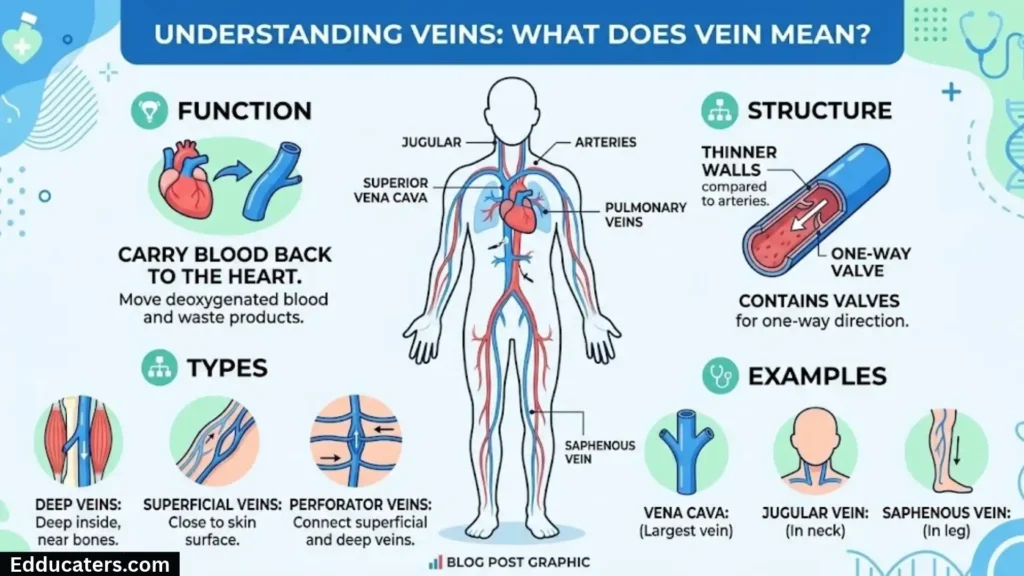
Unlike vain, which is an adjective, vein is a noun. It has several meanings, but the most familiar one relates to the human circulatory system.
The word also appears in geology, biology, and figurative expressions. A sentence about a doctor’s examination uses vein differently from a sentence about a writer’s style, yet both uses are correct.
Vein as a Blood Vessel
In anatomy, a vein is a blood vessel that carries blood toward the heart. Veins form part of the circulatory system alongside arteries and capillaries.
You may hear the word in medical settings when a nurse takes a blood sample, a doctor examines a patient’s circulation, or a healthcare professional discusses a blood vessel.
Common expressions include:
- A vein in the arm.
- A vein in the leg.
- A damaged vein.
- A blood test that requires access to a vein.
- A blocked vein that needs medical assessment.
Here are some sentence examples:
- The nurse found a vein in his arm before drawing blood.
- The doctor examined the swollen vein in her leg.
- A healthcare professional used a needle to access a vein for the blood test.
- The patient asked the doctor about a damaged vein.
One useful scientific detail: most veins carry oxygen-poor blood toward the heart. Pulmonary veins are an important exception because they carry oxygen-rich blood from the lungs to the heart.
This detail helps distinguish veins from arteries. In general, arteries carry blood away from the heart, while veins carry it back toward the heart. The distinction concerns the direction of blood flow, not simply whether the blood contains oxygen.
Vein as a Mineral Deposit
The word vein also has a geological meaning. It can describe a narrow layer or body of minerals that fills a crack in rock or runs through surrounding rock.
Geologists and miners use the term when discussing mineral deposits. For example, a rock formation may contain a vein of quartz, gold, silver, or another mineral.
Consider these examples:
- The miners discovered a vein of gold beneath the hillside.
- A narrow vein of quartz crossed the dark rock.
- Geologists examined a mineral vein during their field survey.
- The mining company investigated a possible silver vein.
In these sentences, vein has no connection to human anatomy. The word describes the shape and position of a mineral deposit.
The shared idea is a distinct, vein-like structure running through a larger material. Context tells you whether the writer is discussing a blood vessel or a geological formation.
Vein in Figurative Expressions
Sometimes, vein describes a particular style, mood, quality, or manner of expression. This use appears frequently in literature, journalism, reviews, and everyday conversation.
For example, when someone says a movie continues in a similar vein, they mean it follows a similar style or approach. The phrase doesn’t refer to a physical blood vessel.
Here are several common expressions:
- In a similar vein: In a similar style or manner.
- In a different vein: In a different style or direction.
- In a humorous vein: In a humorous manner.
- In a serious vein: In a serious manner.
- A vein of sadness: A noticeable quality of sadness running through something.
Examples make these expressions easier to understand:
- The sequel continues in a similar vein to the original movie.
- The speaker shifted to a more serious vein when discussing the problem.
- The author’s latest novel contains a vein of sadness beneath its humor.
- She approached the subject in a humorous vein to keep the audience engaged.
This figurative meaning is especially useful in writing because it gives you a concise way to describe tone or style.
Vain or Vein: Examples in Sentences
The quickest way to master vain or vein examples is to compare sentences that use the two spellings in different contexts. The examples below cover personality, unsuccessful efforts, anatomy, geology, and figurative language.
Vain in a Sentence
Use vain when describing excessive pride or an action that produces no desired result.
- She is vain about her appearance and loves receiving compliments.
- He was too vain to acknowledge his mistake.
- We tried in vain to find the missing keys.
- Their efforts to repair the damaged fence proved vain.
- The rescue team searched in vain for the missing hiker.
- She made a vain attempt to hide her disappointment.
- His vanity made it difficult for him to accept criticism.
These examples demonstrate both major meanings. The first two describe personality, while the remaining sentences focus on unsuccessful efforts.
Vein in a Sentence
Use vein when referring to a blood vessel, a mineral deposit, or a particular style.
- The nurse found a vein in his arm.
- The doctor examined a vein in the patient’s leg.
- The miners discovered a vein of gold underground.
- A narrow vein of quartz ran through the rock.
- The writer continued the story in a similar vein.
- The speaker introduced a vein of humor into the discussion.
- The scientist studied the veins in a leaf.
The last example adds another legitimate meaning: veins in leaves form part of the plant’s transport and support network.
Vain or Vein: Quick Comparison Examples
Paired sentences help you see why choosing the right spelling matters.
| Vain | Vein |
| She is vain about her looks. | A vein was visible on her hand. |
| He made a vain attempt to escape. | The nurse located a vein. |
| We searched in vain for the wallet. | The miners found a vein of silver. |
| Their efforts were in vain. | The author wrote in a similar vein. |
Try reading each sentence without looking at the table. Ask yourself what the word means in context. This simple habit builds stronger word choice skills and helps prevent common spelling mistakes.
What Does “In Vain” Mean?
The phrase in vain means without success, without achieving the intended result, or to no useful effect. It’s one of the most important expressions to remember when learning the difference between vain or vein.
For example, if you search for your phone for twenty minutes but can’t find it, you searched in vain. If you try to persuade someone and they refuse to change their mind, your efforts may also be in vain.
The Cambridge Dictionary explains the expression in vain as meaning unsuccessfully.
definition in the Cambridge English Dictionary
In Vain Meaning and Usage
The phrase can describe an unsuccessful action, an unproductive search, or an attempt that doesn’t achieve its goal.
Examples include:
- I called him several times in vain.
- They searched in vain for the missing dog.
- The rescue teams tried in vain to reach the stranded hikers.
- She knocked on the door in vain because nobody was home.
- We tried to restart the computer, but our efforts were in vain.
You can also use the phrase in a negative sentence: Their efforts were not in vain.
That sentence means the effort had value or produced a worthwhile result. Perhaps the team didn’t win the competition, but its work helped them improve. In that situation, the effort was not in vain.
Is “In Vein” Correct?
If you mean without success, the correct phrase is in vain, not in vein.
| Incorrect spelling | Correct spelling |
| He tried in vein. | He tried in vain. |
| Their search was in vein. | Their search was in vain. |
| All our efforts were in vein. | All our efforts were in vain. |
| I looked in vein for my phone. | I looked in vain for my phone. |
Why do people make this mistake? Both words sound alike, so a writer who remembers the sound but not the spelling may choose the wrong one.
However, vein is perfectly correct in other expressions, such as a vein of gold or in a similar vein. The problem isn’t the word itself. It’s using it in an expression that requires vain.
One additional distinction is worth remembering: “take someone’s name in vain” is a separate established expression that means using someone’s name, especially a sacred name, disrespectfully or without due regard. It doesn’t mean in vein and doesn’t describe a failed search.
Are Vain or Vein Homophones?
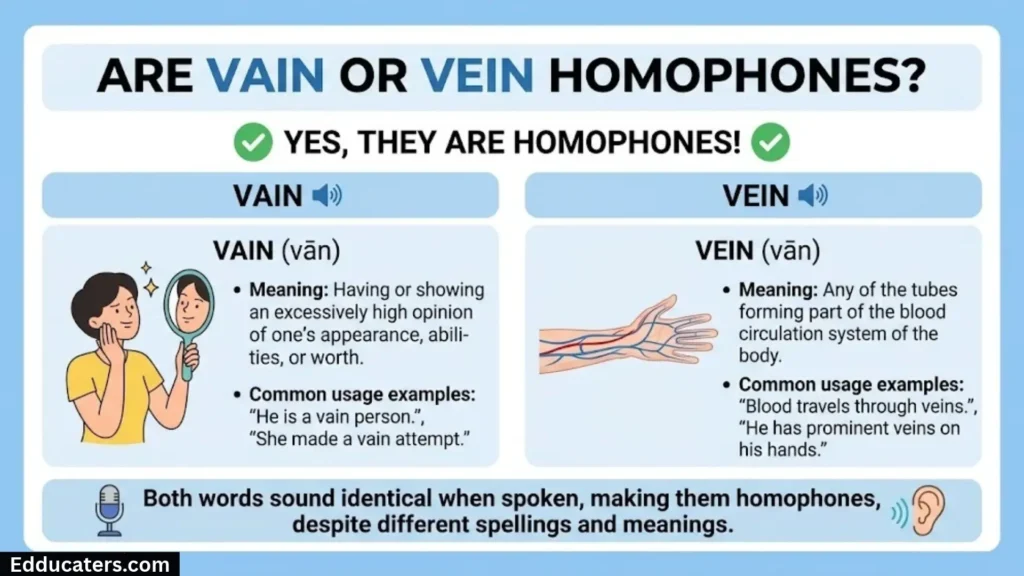
Yes. Vain or vein are homophones because they share the same pronunciation but have different spellings and meanings.
Homophones can cause confusion because spoken English doesn’t always reveal which word a person intends to use. When you hear someone say a word aloud, you may need the surrounding sentence to determine its correct spelling.
For example, the sentence “He tried in vain” uses vain to describe an unsuccessful effort. However, “He noticed a vein in his arm” uses vein to identify a blood vessel.
The pronunciation remains the same, but the meaning changes.
Other familiar homophones include pair and pear, right and write, and flower and flour. Like these pairs, vain or vein require you to pay attention to context.
Here’s a simple way to identify the correct word:
- If the sentence describes pride or a futile effort, choose vain.
- If it describes a blood vessel, mineral deposit, or style, choose vein.
- If you’re writing the expression meaning without success, use in vain.
You don’t need a special pronunciation trick to distinguish these words. Instead, strengthen your understanding of their meanings and common expressions.
Common Vain or Vein Spelling Mistakes
Even experienced writers sometimes confuse homophones. The problem becomes more common when someone writes quickly or relies entirely on how a word sounds.
The following mistakes illustrate how a single letter choice can affect the meaning of a sentence.
| Common mistake | Correct form | Explanation |
| She is very vein. | She is very vain. | Vain describes excessive pride. |
| He tried in vein. | He tried in vain. | In vain means without success. |
| A vain in his arm. | A vein in his arm. | Vein refers to a blood vessel. |
| They found a gold vain. | They found a gold vein. | Vein describes a mineral deposit. |
| The story continues in a similar vain. | The story continues in a similar vein. | Vein describes a style or manner. |
How to Avoid Vain or Vein Errors
You can prevent most mistakes by checking the intended meaning before choosing the spelling.
Ask yourself these three questions:
- Am I describing pride or a failed effort? Use vain.
- Am I talking about blood vessels, minerals, or a particular style? Use vein.
- Am I using the expression meaning without success? Write in vain.
For example, consider the sentence “The team made a vain attempt to repair the machine.”
Here, vain describes an unsuccessful attempt. Replacing it with vein would make the sentence incorrect because the writer isn’t discussing anatomy, geology, or style.
Context is your best guide. Once you understand the meaning, the spelling becomes much easier to remember.
How to Remember Vain or Vein
A simple memory trick can help you distinguish these words without checking a dictionary every time.
Vain = Vanity
Connect vain with vanity, which means excessive pride in yourself or your appearance.
Both words begin with the letters va. This association makes it easier to remember that vain describes someone who cares too much about their looks or achievements.
For example:
The vain man admired his reflection for several minutes.
You can also connect vain with unsuccessful efforts through the familiar expression in vain.
Vein = Blood Vessel
Associate vein with the human body, blood circulation, and medical examinations.
Imagine a nurse preparing to draw blood. The nurse needs to locate a vein, not a vain.
This visual connection helps you remember the spelling whenever you write about anatomy or medical terminology.
The same spelling applies when discussing minerals:
- A vein of gold.
- A vein of silver.
- A vein of quartz.
In Vain = Without Success
Memorize in vain as a complete expression rather than trying to reconstruct its spelling every time.
For example, imagine searching every room in your house for your keys without finding them. You searched in vain.
The phrase remains in vain whether you’re describing a small inconvenience or a major unsuccessful effort.
The easiest memory rule is:
- Vanity = vain
- Blood vessel = vein
- Without success = in vain
These associations are simple enough to recall while writing emails, school assignments, articles, or everyday messages.
Vain or Vein: Pronunciation and Word Origins
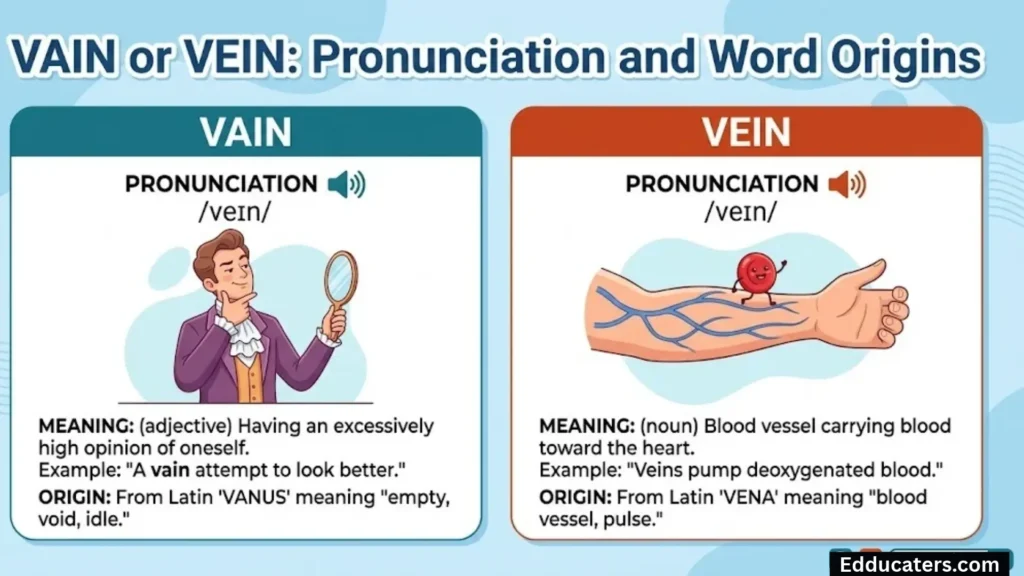
Although vain or vein have different meanings, their pronunciation is identical in standard American and British English. Their separate histories explain why the spellings differ despite their shared sound.
Vain or Vein Pronunciation
Both words have the International Phonetic Alphabet transcription /veɪn/. The pronunciation contains three main sounds:
- /v/ — the initial consonant, as in very.
- /eɪ/ — the vowel sound heard in day.
- /n/ — the final consonant, as in name.
You can hear the pronunciations in these dictionary entries:
- Cambridge Dictionary: Vain pronunciation
- Cambridge Dictionary: Vein pronunciation
Both entries give the same US and UK pronunciation.
Because these words are pronounced alike, you can’t reliably identify the spelling by listening alone. You need to consider the meaning of the sentence.
Origin of Vain
The word vain entered English through Old French and ultimately comes from the Latin word vanus, meaning empty or lacking substance.
Over time, its meaning developed to include things that were fruitless, useless, or unsuccessful. The expression in vain preserves this older sense of something producing no result.
The word also developed its familiar meaning of excessive pride or concern about appearance and achievements.
For example, when someone makes a vain attempt, the attempt doesn’t achieve its intended purpose. When someone is described as vain, the focus is on their excessive self-regard.
These meanings are related historically, but they serve different purposes in modern English.
Origin of Vein
The word vein also entered English through Old French, but it comes from the Latin word vena, meaning a blood vessel.
Its anatomical meaning remains central today. However, the word also developed other uses, including mineral deposits, leaf structures, and figurative descriptions of mood or style.
For example, a vein of quartz describes a mineral formation, while a vein of sadness describes an emotional quality running through a piece of writing.
For further reading, see the Oxford Learner’s Dictionaries entry for vain and the entry for vein.
The important point is that vain or vein have distinct origins. Their similar modern pronunciation doesn’t make them interchangeable.
Is There a Difference in American or British English?
No. There is no standard American-versus-British spelling difference between vain or vein.
Both American English and British English use the same spellings:
| Word | American English | British English |
| Vain | Vain | Vain |
| Vein | Vein | Vein |
| In vain | In vain | In vain |
| In a similar vein | In a similar vein | In a similar vein |
The meanings also remain essentially the same across these varieties of English.
For example, an American writer might say, “We searched in vain for the missing document.” A British writer could use exactly the same sentence.
Likewise, both writers would use vein when referring to a blood vessel or a mineral deposit.
Don’t confuse this pair with words that genuinely have regional spelling differences, such as color and colour or organize and organise. Those examples involve different spelling conventions. Vain or vein involve different meanings.
If you’re writing for an American audience, use the standard American spelling of each word according to its meaning. The same principle applies when writing for British readers.
Frequently Asked Questions
What Is the Difference Between Vain or Vein?
Vain is an adjective that describes excessive pride or an unsuccessful effort. Vein is a noun that refers to a blood vessel, a mineral deposit, or a particular style or manner.
For example, “She is vain about her appearance” describes personality, while “The nurse found a vein” refers to anatomy.
What Does Vain Mean?
Vain means excessively proud of your appearance, abilities, or achievements. It can also describe something unsuccessful or futile.
For example, “He made a vain attempt to escape” means his attempt failed.
What Does Vein Mean?
A vein is a blood vessel that carries blood toward the heart. The word can also describe a mineral deposit in rock or a particular style or mood.
For example, “The author continued in a similar vein” means the author continued in a similar style.
What Does In Vain Mean?
In vain means without success or without achieving the intended result.
For example, “We searched in vain for the missing keys” means the search didn’t find them.
Is the Phrase “In Vein” Correct?
Not when you mean without success. The correct expression is in vain.
Use vein in other contexts, such as a vein in the arm, a vein of gold, or in a similar vein.
Are Vain or Vein Pronounced the Same?
Yes. In standard American and British English, both words are pronounced /veɪn/. They are homophones, so context determines which spelling you need.
Is Vain Always Negative?
Not in every context, although the word often has a negative tone when describing excessive pride.
For example, vain in “She is vain about her appearance” criticizes excessive self-interest. In in vain, the word describes an unsuccessful effort rather than someone’s personality.
Does Vein Only Refer to Blood Vessels?
No. A vein can refer to a blood vessel, a mineral deposit, or a particular quality, style, or mood.
Examples include a vein in the arm, a vein of gold, and a story written in a similar vein.
How Can I Remember the Difference Between Vain or Vein?
Connect vain with vanity and excessive pride. Connect vein with blood vessels or mineral deposits.
For unsuccessful efforts, remember the complete expression in vain.
Are Vain or Vein Spelled Differently in American and British English?
No. Both words have the same spelling in standard American and British English. The correct choice depends on meaning rather than regional spelling rules.
Conclusion
Choosing between vain or vein becomes easy when you understand what each word means. Although they sound alike, their meanings and grammatical roles are different.
Use vain when describing excessive pride or an unsuccessful effort. Use vein when referring to a blood vessel, a mineral deposit, or a particular style or mood.
Most importantly, remember that the correct expression for an unsuccessful action is in vain, not in vein.
Keep this quick rule in mind whenever you write:
- Vain: Vanity, pride, or futility.
- Vein: Blood vessels, minerals, or style.
- In vain: Without success.
Once you connect each spelling with its meaning, you’ll be able to use both words accurately in everyday writing.

Hi, I’m Nathan Whitmore, and I enjoy making English grammar easy for learners of all ages. I believe grammar should be practical, not confusing. I write simple, well-researched guides that help readers improve their writing, speaking, and overall communication skills.
I spend a lot of time studying grammar patterns, sentence construction, punctuation, and modern English usage. My goal is to create lessons that anyone can understand, whether they are students, teachers, or professionals.
Books
Clear English Grammar
The Smart Writer’s Grammar Handbook
 Claire Holloway
 Julian Mercer