
Have you ever stared at a word, typed it out, and then paused, suddenly unsure if that extra “e” belongs there? You aren’t alone. The word describing things that reflect light—like a polished car or a freshly cleaned window—frequently causes confusion. Writers often wonder whether the correct spelling is “shiny” or “shiney.”
While “shiney” might look like a logical variation because it comes from the verb “shine,” English spelling rules often defy simple patterns. In this guide, we will clear up this common spelling dilemma once and for all. You will learn the exact rule for why one form is correct, how to use it confidently in your writing, and why the other version is considered a misspelling.
Quick Answer
The correct spelling is shiny. It is an adjective derived from the verb “shine” by adding the suffix “-y.” The spelling “shiney” is incorrect and should be avoided in all forms of writing. Always use “shiny” to describe something that reflects light or has a smooth, bright appearance.
Comparison Table
| Feature | Correct Word | Incorrect Word |
| Spelling | Shiny | Shiney |
| Part of Speech | Adjective | N/A (Misspelling) |
| Meaning | Reflecting light; bright | N/A |
| Grammar Rule | Drop the silent ‘e’ before adding ‘y’ | None |
| Usage | Standard US/UK English | Never use |
| Memory Tip | “Shiny” has no ‘e’ because it’s bright | “Shiney” has an ‘e’ that doesn’t belong |
| Example | The coin is very shiny. | The coin is very shiney. (Wrong) |
The Meaning of Shiny

Shiny is an adjective that describes an object that gives off a bright reflection of light. It often implies that the surface is smooth, polished, or new. It can also describe a person’s face, perhaps from perspiration or natural oils.
- Grammar Role: It functions as a predicate adjective (e.g., “The floor is shiny”) or an attributive adjective (e.g., “a shiny penny”).
- Pronunciation: /ˈʃaɪ.ni/ (SHY-nee).
- Examples:
- The new car had a beautiful, shiny finish.
- She polished the silverware until it was bright and shiny.
- Her eyes were shiny with unshed tears.
Key Differences
The difference between these two terms is simple: one is a recognized English word, and the other is a common error.
- Standardization: “Shiny” is the only accepted spelling in all professional dictionaries, including Merriam-Webster and the Oxford English Dictionary.
- The “e” Problem: Many writers mistakenly keep the “e” from the verb “shine” when converting it to an adjective. However, English orthography usually requires dropping the silent “e” when adding a suffix that starts with a vowel (though here, the suffix is just “y,” the silent “e” rule still dictates its removal to maintain the correct root structure).
- Reliability: Using “shiny” ensures your professional credibility, while “shiney” will immediately flag your writing as careless to readers and editors.
The Grammar Rule
The formation of “shiny” follows a common English spelling pattern. When you have a base word ending in a silent “e,” such as “shine,” you generally drop that “e” before adding a suffix.
While “shiny” is technically formed by adding “-y” to the root, think of it as removing the final “e” from “shine” to keep the pronunciation clear. If you kept the “e,” you might mistakenly assume the word is pronounced with a long “e” sound before the final syllable, which would change the word entirely. There are no exceptions to this rule for this specific word; “shiny” is the sole standard form.
When to Use “Shiny”
- Academic Writing: Use “shiny” to describe physical textures or light reflection in scientific observations or descriptive essays.
- Professional/Business Writing: Use it in marketing copy or product descriptions. For example, “Our luxury watch features a shiny, stainless-steel bezel.”
- Emails: It is perfectly acceptable in professional emails to describe items or results.
- Daily Conversation: Use it freely to describe anything that catches the light.
Common Mistakes
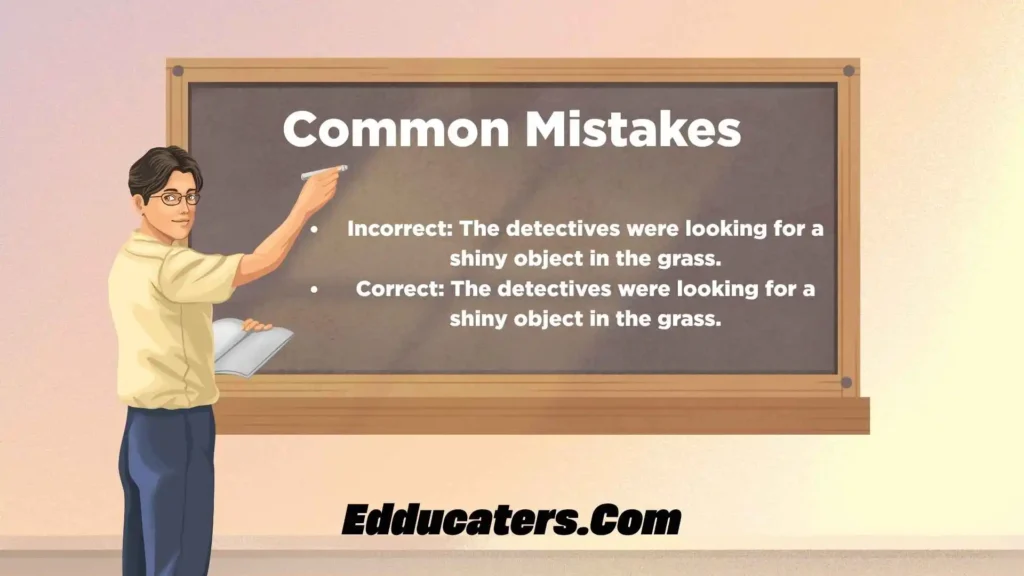
The primary reason people confuse these two is the influence of the verb “shine.” Because “shine” clearly contains an “e,” the brain naturally wants to carry that letter over into the adjective form. This is known as a “spelling analog error”—where a writer applies the spelling of the root word incorrectly to its derivative.
- Incorrect: The detectives were looking for a shiny object in the grass.
- Correct: The detectives were looking for a shiny object in the grass.
- Tip: If you are ever in doubt, remember that “shiny” rhymes with “tiny.” Both are short, clean adjectives that do not contain an “e” before the final “y.”
Original Examples
- The children marveled at the shiny gold coins inside the pirate chest.
- After hours of detailing, his motorcycle looked incredibly shiny.
- The advertisement promised a shiny, streak-free finish for all glass surfaces.
- She wore a pair of shiny patent leather shoes to the gala.
- The morning sun made the dew on the grass look shiny and ethereal.
- He kept his boots shiny for every inspection.
- The website uses a shiny new interface that is much easier to navigate.
- I need a shiny new idea to present at the board meeting.
- The artist used a shiny varnish to protect the painting.
- His forehead was shiny from the intense heat in the kitchen.
- The store window was filled with shiny trinkets and baubles.
- The cat was captivated by the shiny reflection of the laser pointer.
- Her smile was as shiny and bright as the stars above.
- Please use a cloth to wipe the table until it is shiny.
- The beetle’s wings had a distinct, shiny green metallic hue.
Memory Trick
To remember the correct spelling forever, visualize the “e” in “shine” being polished away until the surface is so smooth and reflective that the “e” slips right off. You are left with the “shiny” surface. If you see an “e” in the middle, it’s not “shiny”—it’s wrong.
Mini Quiz
- Which is the correct spelling? a) Shiney b) Shiny c) Shineey d) Shyny Answer: b
- Why is “shiney” incorrect? a) It is a noun. b) It is British slang. c) It is a misspelling of the adjective “shiny.” d) It has too many vowels. Answer: c
- Which sentence is grammatically correct? a) The floor looks very shiney today. b) The floor looks very shiny today. c) The floor looks very shine-y today. d) The floor is a shiney surface. Answer: b
- How do you form the adjective from the verb “shine”? a) Add “-ey” b) Keep the “e” and add “-y” c) Drop the “e” and add “-y” d) Just add an “s” Answer: c
- What does the word “shiny” mean? a) Dull and rough b) Reflecting light c) Very old d) Soft to the touch Answer: b
FAQs
Is “shiny” or “shiney” correct in British English?
Only “shiny” is correct in British English. There is no variation in spelling between American and British English for this word. Both linguistic standards strictly use the form without the extra “e.” Any use of “shiney” in British or American texts is considered an orthographic error.
Can “shiny” ever be a noun?
No, “shiny” is strictly an adjective. If you hear people use “a shiny” as a noun, they are using colloquial shorthand to refer to a shiny object, but this is informal and should not be used in professional writing. Always pair the adjective with a noun, such as “a shiny toy.”
Why do so many people misspell it as “shiney”?
People misspell it as “shiney” because the root verb “shine” contains an “e.” Writers often default to maintaining the root spelling when adding a suffix. Since many English words keep their root spelling, this is a common psychological mistake, even though it violates standard English spelling rules for this specific term.
Does “shiny” have a plural form?
As an adjective, “shiny” does not have a plural form. Adjectives in English do not change based on the number of items they describe. Whether you are describing one car or ten cars, you always use “shiny.” For example: “The shiny car” or “The shiny cars.”
Is there an adverb form of “shiny”?
There is no standard adverb like “shinyly.” If you need to describe how something shines, it is better to use a phrase like “in a shiny way” or simply use the verb “shines.” For example: “The light shines brightly” is the preferred way to express the action of shining.
How can I ensure I never make this mistake again?
The most effective way is to associate the word “shiny” with the word “tiny.” Both words share a similar structure and rhythm, and neither contains an “e” before the “y.” Creating this mental association helps bypass the urge to look at the verb “shine” when determining the adjective’s spelling.
Key Takeaways
- Shiny is the only correct spelling; shiney is a common misspelling.
- The word describes objects that reflect light or appear polished.
- Always drop the silent “e” from “shine” when creating the adjective.
- The term is an adjective and should not be used as a noun.
- There is no variation in spelling between US and UK English.
- Visualizing the word alongside “tiny” helps reinforce the correct spelling.
Conclusion
Navigating the complexities of English spelling can be challenging, but some rules are steadfast. When you need to describe a surface that gleams or reflects light, remember that the “e” from “shine” must be left behind.
By using shiny, you ensure your writing remains professional, clear, and accurate. Avoid the common trap of the “shiney” misspelling, and your work will maintain the polished, high-quality standard your readers expect.

Hello, I’m Claire Holloway. I have always been passionate about the English language and enjoy turning complex grammar rules into simple, easy-to-follow lessons. I believe that every learner can become a confident English writer with the right guidance.
I create educational content focused on grammar, vocabulary, sentence structure, and writing improvement. Every article I publish is designed to help readers learn with confidence and accuracy.
Books
Grammar Without Confusion
Modern English Usage Guide
 Nathan Whitmore
 Julian Mercer